Description
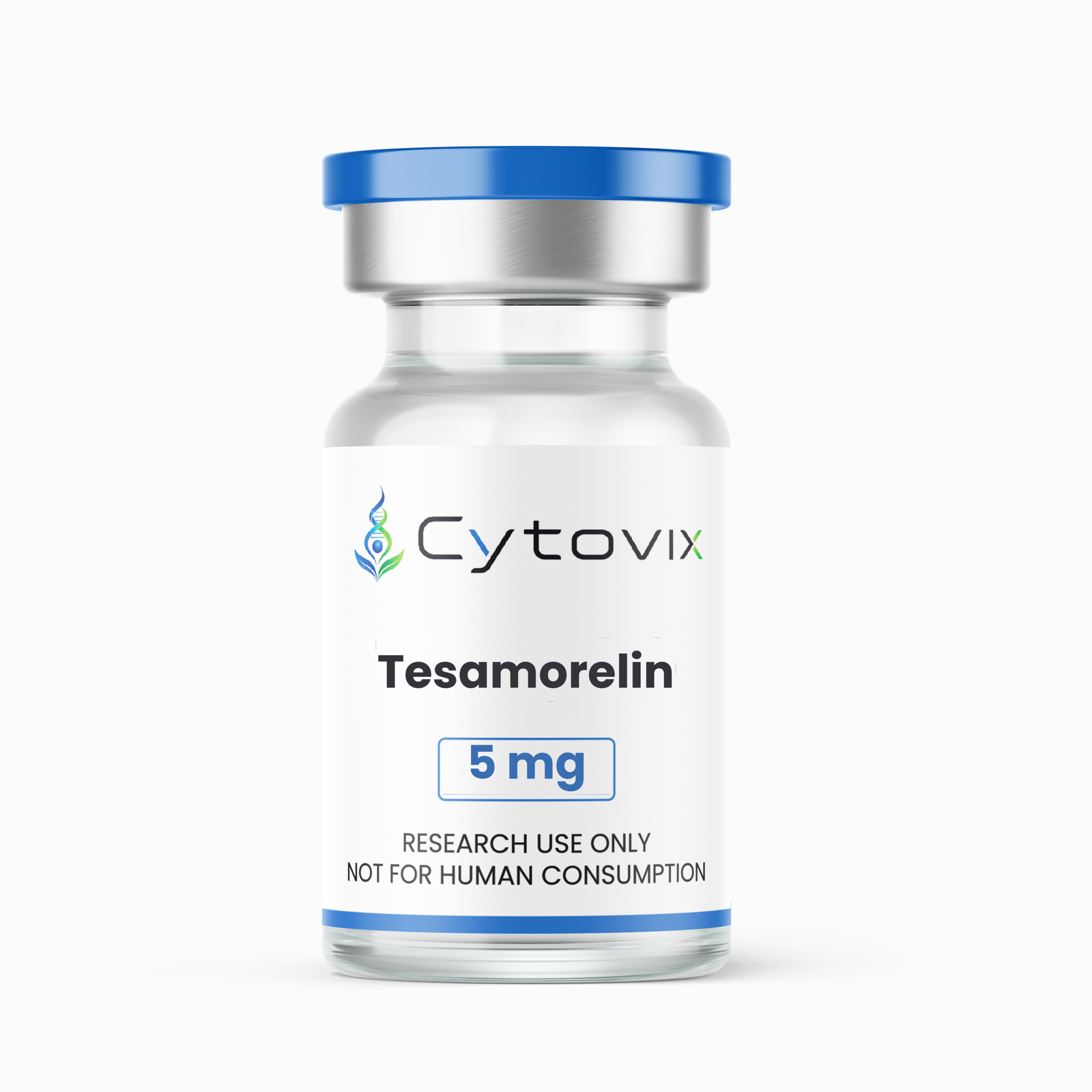
Tesamorelin 5 mg
Tesamorelin 5 mg is a stabilized synthetic peptide. It is an analog of growth hormone–releasing hormone (GHRH 1–44). A small modification at the N-terminal (trans-3-hexenoic acid) helps improve stability and reduce breakdown in research settings.
Tesamorelin is made up of 44 amino acids. It binds to GHRH receptors on pituitary somatotroph cells. This action supports the natural release of growth hormone in research models. It also helps maintain normal pulsatile GH secretion patterns.
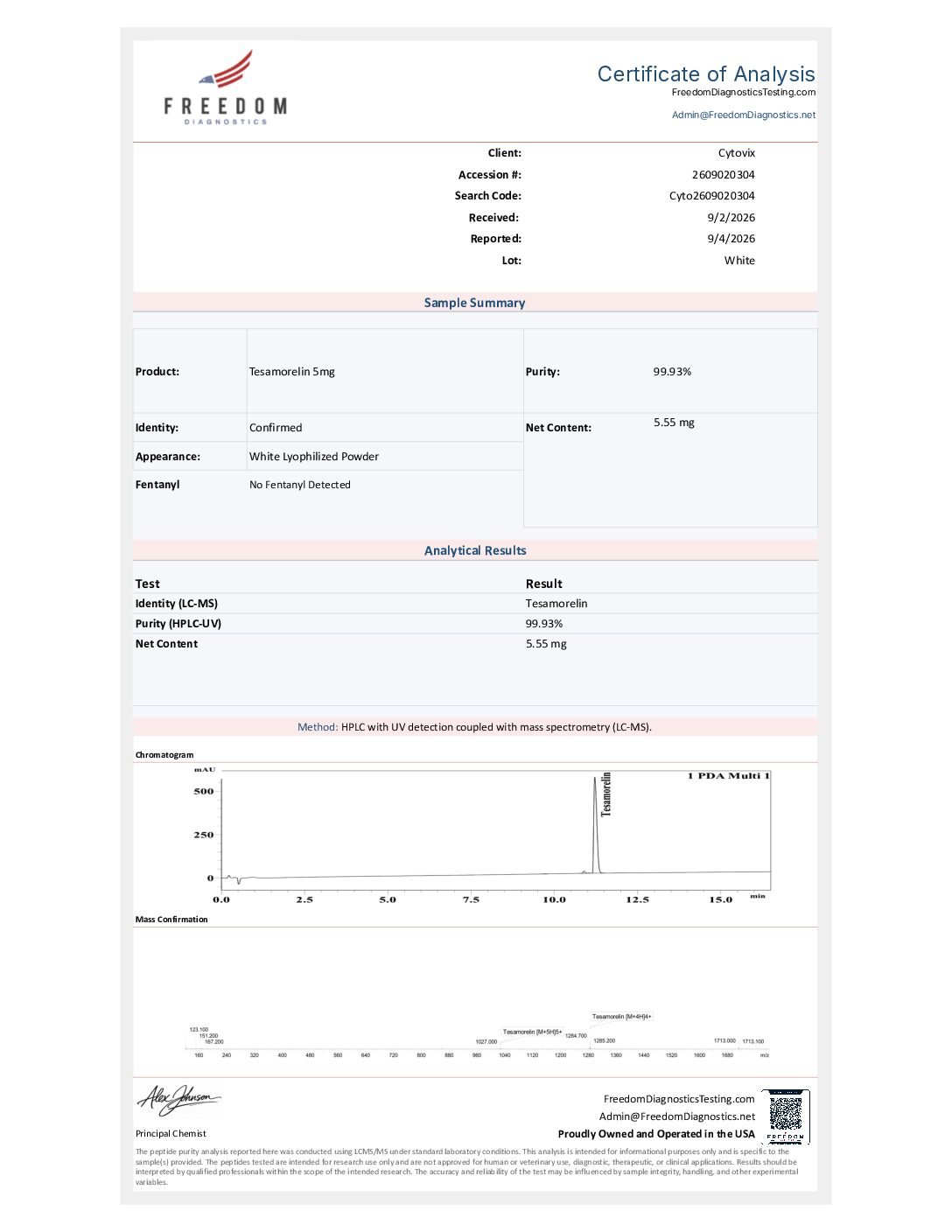
Each vial contains 5 mg of tesamorelin as a lyophilized powder. The purity is typically High purity by HPLC. It is reconstituted before use in controlled laboratory environments.
Researchers use tesamorelin to study the somatotropic axis. It is commonly used in endocrine and metabolic research. It is also explored in studies related to fat distribution and GH–IGF-1 signaling pathways.
Tesamorelin is intended for research use only. It is not approved for human consumption or therapeutic use.
Tesamorelin variations You Can Buy at Orion Peptides
- Tesamorelin 5 mg
- Tesamorelin 10 mg
Tesamorelin Mechanism of Action in Research Models
In preclinical and investigational studies, tesamorelin acts as a selective GHRH receptor agonist. It binds to the growth hormone–releasing hormone receptors on pituitary cells. This binding activates Gs-protein signaling pathways.
Activation increases intracellular cyclic AMP levels. It also raises protein kinase A activity. These signals promote transcription of growth hormone genes. The result is enhanced pulsatile GH release.
Growth hormone stimulates hepatic IGF-1 production. IGF-1 promotes lipolysis in research models. It also limits adipocyte differentiation. These effects favor fat mobilization, especially in visceral tissue.
The trans-3-hexenoic acid modification improves resistance to DPP-IV cleavage. This change extends peptide stability. It also supports a more favorable pharmacokinetic profile than native GHRH.
Tesamorelin Peptide Sequence
Tesamorelin is a linear peptide with 44 amino acids. It includes an N-terminal trans-3-hexenoyl modification.
Peptide sequence:
trans-3-hexenoyl-Tyr-Ala-Asp-Ala-Ile-Phe-Thr-Asn-Ser-Tyr-Arg-Lys-Val-Leu-Gly-Gln-Leu-Ser-Ala-Arg-Lys-Leu-Leu-Gln-Asp-Ile-Met-Ser-Arg-Gln-Gln-Gly-Glu-Ser-Asn-Gln-Glu-Arg-Gly-Ala-Arg-Ala-Arg-Leu-NH₂
Chemical details include:
1. Molecular formula:
C₂₂₁H₃₆₆N₇₂O₆₇S
2. Tesamorelin Molecular weight:
Approximately 5135.78–5136 Da
3. Key modification:
N-terminal trans-3-hexenoyl group
4. CAS number:
218949-78-1
This structure preserves full GHRH bioactivity. It also extends the half-life in experimental systems.
Tesamorelin Research
Tesamorelin has been widely studied in metabolic research. Early work focused on HIV-associated lipodystrophy, and researchers also examined visceral adiposity and endocrine dysfunction.
VAT reduction is reported under randomized controlled trials. Over 26 weeks, the average reduction reached 15 to 18 percent, and the placebo groups also showed increases in visceral fat. Extended studies reported sustained effects up to 52 weeks.
Research also showed reductions in liver fat content. Some cohorts reported decreases of nearly 80 percent. Improvements appeared in lipid profiles and insulin sensitivity markers. Aminotransferase levels also improved in subjects with elevated baselines.
Additional studies explore NAFLD and obesity-related insulin resistance. Tesamorelin increases IGF-1 levels in a dose-dependent manner. Pulsatile GH patterns remain intact. This differs from continuous GH infusion models.
Safety data report mostly mild injection-site reactions. Transient IGF-1 elevations require monitoring. No clear liver injury appeared in trials, and the ongoing research examines long-term endocrine effects and receptor kinetics.
How to Store and Handle Tesamorelin
Tesamorelin is supplied as a lyophilized powder. Store unopened vials at 2 to 8 degrees Celsius. Protect the compound from light and moisture. Do not freeze the powder.
Reconstitute using bacteriostatic water or sterile diluent. Perform all steps under aseptic conditions, and refrigerate reconstituted solutions after mixing.
Use solutions within established stability periods. Follow protocol-specific guidelines. Always use sterile tools and proper protective equipment.
Disclaimer
Tesamorelin is an investigational research peptide. It is intended only for laboratory and animal research. It is not approved for general human use.
Regulatory approval exists only for specific prescription compounds. Research-grade tesamorelin is not approved for therapy or supplementation. It falls under research chemical classifications, including WADA S0.
Preclinical findings do not predict outcomes outside studied settings. No claims are made regarding safety or effectiveness in humans. Handle only in qualified research facilities with institutional oversight. Compounds are sold strictly for laboratory use only.


Reviews
There are no reviews yet.